
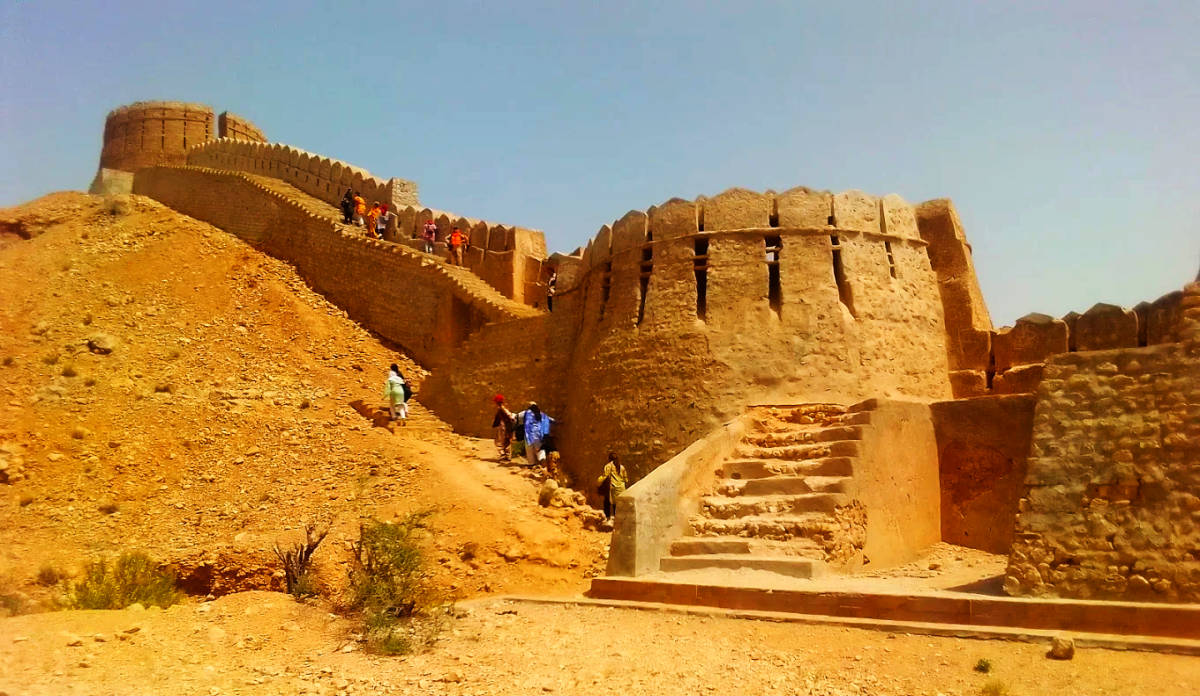
The Great Wall of Sindh
Ranikot Fort is one of Pakistan’s most remarkable historical monuments and is often described as the Great Wall of Sindh. Located in the Kirthar Mountains of Jamshoro District, approximately 90 kilometres from Sehwan Sharif, the fort is enclosed by enormous stone walls that extend for nearly 32 kilometres, making it one of the largest forts in the world.
Surrounded by rugged hills, deep valleys and dramatic scenery, Ranikot Fort combines history, mystery and natural beauty. Although the exact date of its construction remains uncertain, the fort has fascinated historians, archaeologists and travelers for generations. Today it is one of Sindh’s most rewarding destinations for history enthusiasts, photographers, hikers and adventure travelers.
Quick Facts
| Province | Sindh |
| District | Jamshoro |
| Distance from Karachi | Approximately 260 km |
| Distance from Sehwan Sharif | Approximately 90 km |
| Wall Length | Approximately 32 kilometres |
| Best Time to Visit | October to March |
| Nickname | The Great Wall of Sindh |
History of Ranikot Fort
The origins of Ranikot Fort remain uncertain, and historians continue to debate when it was first built. Some scholars believe the earliest defensive walls may date back to the Sassanian or early Islamic period, while others suggest that parts of the fort were rebuilt or expanded during the Talpur era in the 18th and 19th centuries.
The fort was designed to defend the surrounding valleys and trade routes through the Kirthar Mountains. Its massive stone walls follow the contours of the hills, enclosing an enormous area that includes smaller forts, reservoirs and natural springs.
Despite its impressive size, much of Ranikot remains unexplored, adding to its reputation as one of Pakistan’s most mysterious historical sites.
Top Attractions
Massive Defensive Walls
The stone walls of Ranikot stretch across hills and valleys for approximately 32 kilometres, creating one of the world’s largest fortification systems.
Sann Gate
The main entrance to the fort, located near the town of Sann, is the most commonly used access point for visitors.
Meeri Fort
Situated on a hill inside the main fort, Meeri Fort served as the central defensive stronghold and offers spectacular panoramic views.
Shergarh Fort
This smaller inner fort stands on another hilltop and can be reached by hiking through the rugged landscape.
Ancient Water Reservoirs
Several reservoirs and water storage systems within the fort demonstrate the engineering skills of its builders.
Kirthar Mountain Scenery
The surrounding mountains provide breathtaking landscapes ideal for hiking, photography and nature lovers.
Things to Do
- Walk along the Ancient Fort Walls
- Hike to Meeri Fort
- Visit Shergarh Fort
- Landscape Photography
- Explore Historic Gates
- Picnic in the Valley
- Watch Sunrise or Sunset
- Study Historic Architecture
- Observe Local Wildlife
Architecture
Ranikot Fort was built primarily from locally quarried limestone and stone blocks. The walls vary in height and thickness depending on the terrain, with numerous bastions, watchtowers and defensive positions. The fortifications blend remarkably well with the surrounding mountains, making the complex both impressive and difficult to attack.
How to Plan Your Tour from Islamabad
By Air
Fly to Karachi, then travel by road via Hyderabad and Sann to Ranikot Fort.
By Road
Drive via the M-5 Motorway and Indus Highway to Sann before continuing to the fort. A four-wheel-drive vehicle is recommended for the final section of the journey.
Suggested 3-Day Tour
Day 1: Arrive in Hyderabad or Sehwan Sharif.
Day 2: Full-day excursion to Ranikot Fort, including Meeri Fort and Shergarh Fort.
Day 3: Visit Manchar Lake or Sehwan Sharif before returning.
Accommodation
- Hotels in Sehwan Sharif
- Hotels in Hyderabad
- Guest Houses in Jamshoro
- Camping (with permission and proper equipment)
Nearby Attractions
Best Time to Visit
- October to March: Pleasant weather for hiking and sightseeing.
- April: Warm temperatures.
- May to September: Extremely hot; avoid midday visits.
Travel Tips
- Use a four-wheel-drive vehicle for easier access.
- Carry plenty of drinking water.
- Wear hiking shoes and sun protection.
- There are very few facilities inside the fort.
- Visit early in the morning during summer.
- Do not climb unstable sections of the walls.
- Help preserve this important archaeological monument by leaving no litter behind.
Frequently Asked Questions
Why is Ranikot Fort famous?
Ranikot Fort is famous for its enormous defensive walls, earning it the nickname “The Great Wall of Sindh.”
How long are the walls of Ranikot Fort?
The outer walls extend for approximately 32 kilometres, making it one of the largest fortification systems in the world.
Who built Ranikot Fort?
The exact builders remain uncertain. Historians believe the fort developed over several centuries and was repaired or expanded during the Talpur period.
Can visitors hike to Meeri Fort?
Yes. The hike to Meeri Fort is one of the highlights of visiting Ranikot and rewards visitors with magnificent views.
How far is Ranikot Fort from Karachi?
The fort is approximately 260 kilometres from Karachi.
When is the best time to visit?
October through March offers the most comfortable weather for exploring the fort.