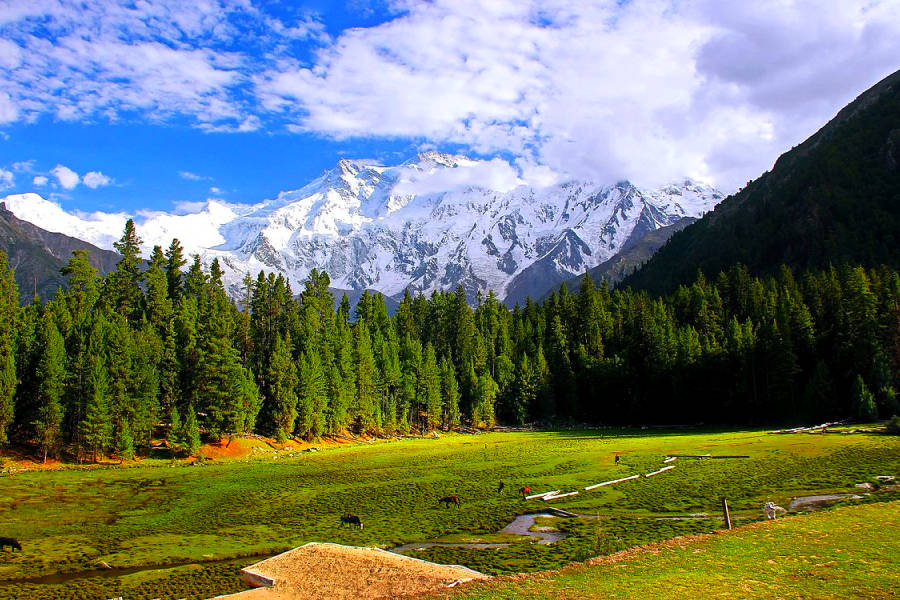
The Nanga Parbat Base Camp Trek is one of the most rewarding trekking adventures in Pakistan. Combining breathtaking mountain scenery, traditional villages, alpine forests, and the famous Fairy Meadows, this trek offers a remarkable introduction to the mighty Himalayas of Northern Pakistan.
Dominating the landscape at 8,126 meters, Nanga Parbat is the ninth-highest mountain in the world and one of the most famous peaks in mountaineering history. Known as the “Killer Mountain” due to its challenging climbing history, it rises dramatically above the surrounding valleys, creating one of the most spectacular mountain views on Earth.
The trek to Nanga Parbat Base Camp passes through the legendary Fairy Meadows, a lush alpine meadow surrounded by forests and offering incredible views of the mountain’s immense north face. It is often considered one of the most beautiful places in Pakistan and a highlight of any visit to the country’s northern regions.
Tour Highlights
- Visit the world-famous Fairy Meadows
- Trek to Nanga Parbat Base Camp
- Experience stunning views of the 8,126-meter Nanga Parbat
- Walk through alpine forests and mountain meadows
- Enjoy spectacular Himalayan scenery
- Stay in traditional mountain lodges and camps
- Travel along the legendary Karakoram Highway
- Visit local mountain communities
- Excellent opportunities for photography and nature lovers
- One of Pakistan’s most accessible high-mountain treks
Quick Facts
| Duration | 10 Days |
| Maximum Altitude | 3,967 meters (Nanga Parbat Base Camp) |
| Difficulty | Moderate |
| Trekking Days | 3–4 Days |
| Best Season | May to October |
| Starting Point | Islamabad |
Detailed Itinerary
Day 1 – Arrival in Islamabad
Arrival at Islamabad International Airport. Meet and assist by our representative and transfer to your hotel. Tour briefing and preparation for the trek.
Overnight in Islamabad.
Day 2 – Islamabad to Chilas
Drive north along the Karakoram Highway, following the Indus River through spectacular mountain landscapes. Pass through Abbottabad, Besham, and Dasu before reaching Chilas.
Overnight in Chilas.
Day 3 – Chilas to Fairy Meadows
Drive to Raikot Bridge and transfer to specially operated mountain jeeps for the thrilling journey to Tato Village. Begin the trek to Fairy Meadows through pine forests and mountain trails.
Arrival at Fairy Meadows with magnificent views of Nanga Parbat.
Overnight at Fairy Meadows.
Day 4 – Explore Fairy Meadows
Full day to enjoy Fairy Meadows. Relax, photograph the spectacular mountain scenery, and explore the surrounding forests and viewpoints.
The sunset and sunrise views of Nanga Parbat from Fairy Meadows are among the most memorable experiences in Pakistan.
Overnight at Fairy Meadows.
Day 5 – Trek to Beyal Camp
A scenic trek through alpine forests and meadows leads to Beyal Camp, offering even closer views of the immense north face of Nanga Parbat.
Overnight at Beyal Camp.
Day 6 – Nanga Parbat Base Camp Excursion
Continue trekking toward Nanga Parbat Base Camp and the Raikot Glacier viewpoint. Enjoy extraordinary views of the mountain’s north face, glaciers, and surrounding peaks.
Spend time at the base camp area before returning to Beyal Camp or Fairy Meadows.
Overnight at Fairy Meadows.
Day 7 – Return to Tato Village and Chilas
Descend from Fairy Meadows to Tato Village and continue by jeep to Raikot Bridge. Drive to Chilas.
Overnight in Chilas.
Day 8 – Chilas to Islamabad
Drive south along the Karakoram Highway back to Islamabad.
Overnight in Islamabad.
Day 9 – Islamabad Sightseeing
Visit Faisal Mosque, Pakistan Monument, Lok Virsa Museum, Daman-e-Koh, and local markets. Free time for shopping and relaxation.
Overnight in Islamabad.
Day 10 – Departure
Transfer to Islamabad International Airport for onward flights.
End of services.
What is Fairy Meadows?
Fairy Meadows is a spectacular alpine meadow located at approximately 3,300 meters above sea level. Named by German climbers in the 1950s, it offers one of the most beautiful mountain panoramas in the world.
Surrounded by pine forests and overlooked by the towering north face of Nanga Parbat, Fairy Meadows has become one of Pakistan’s most iconic travel destinations.
About Nanga Parbat
Nanga Parbat, meaning “Naked Mountain,” is the westernmost peak of the Himalayan range. Standing at 8,126 meters, it ranks as the ninth-highest mountain in the world.
Its immense Rupal Face rises nearly 4,600 meters above the valley floor and is considered one of the tallest mountain faces on Earth. The mountain has played a significant role in the history of Himalayan mountaineering and continues to attract climbers and trekkers from around the world.
What’s Included
- Airport transfers
- Hotel accommodation
- Transportation throughout the tour
- Jeep transfer to Tato Village
- Professional trekking guide
- Accommodation at Fairy Meadows
- Camping arrangements where required
- Daily breakfast
- Porter support for group equipment
- Driver expenses, fuel and tolls
What’s Not Included
- International airfare
- Visa fees
- Travel insurance
- Lunches and dinners
- Personal trekking equipment
- Tips and gratuities
- Personal expenses
Who Should Join This Trek?
Unlike the demanding K2 Base Camp Trek, the Nanga Parbat Base Camp Trek is suitable for most reasonably fit travelers. It offers high mountain scenery without requiring extensive technical trekking experience.
This makes it one of the best trekking adventures for first-time visitors to Pakistan who wish to experience the grandeur of the Himalayas.
Best Time to Visit
The best trekking season runs from May through October. During spring and summer, Fairy Meadows is covered with wildflowers, while autumn offers clear skies and spectacular mountain views.
Tour Price
Starting from USD 1,450 per person
Prices vary according to group size, accommodation category, and transportation requirements.
Book This Trek
Discover why Fairy Meadows and Nanga Parbat are considered among the most beautiful destinations in Asia. Join Hindukush Tours and Travel for an unforgettable Himalayan adventure.
Hindukush Tours and Travel
Islamabad, Pakistan
Website: https://hindukush.com.pk